A job board can have a well-designed website, a clearly defined audience and a strong employer acquisition strategy. But what happens when candidates arrive and cannot find enough relevant opportunities?
Perhaps a specialist technology job board has plenty of software engineering roles but limited cybersecurity opportunities. A regional employment marketplace may cover major cities well but have very little inventory in emerging locations. For a new job board, the challenge can be even greater: building a useful collection of vacancies before a steady flow of employers starts posting.
These are not always problems with the platform itself. Sometimes, the missing piece is job inventory.
This is where job board backfill becomes important. By supplementing direct employer listings with relevant opportunities from external sources, job boards can broaden their coverage and serve their audiences more effectively. But successful backfill involves more than importing additional listings. It requires a clear understanding of what inventory is missing and which external data can fill that gap.
What Is Job Board Backfill?
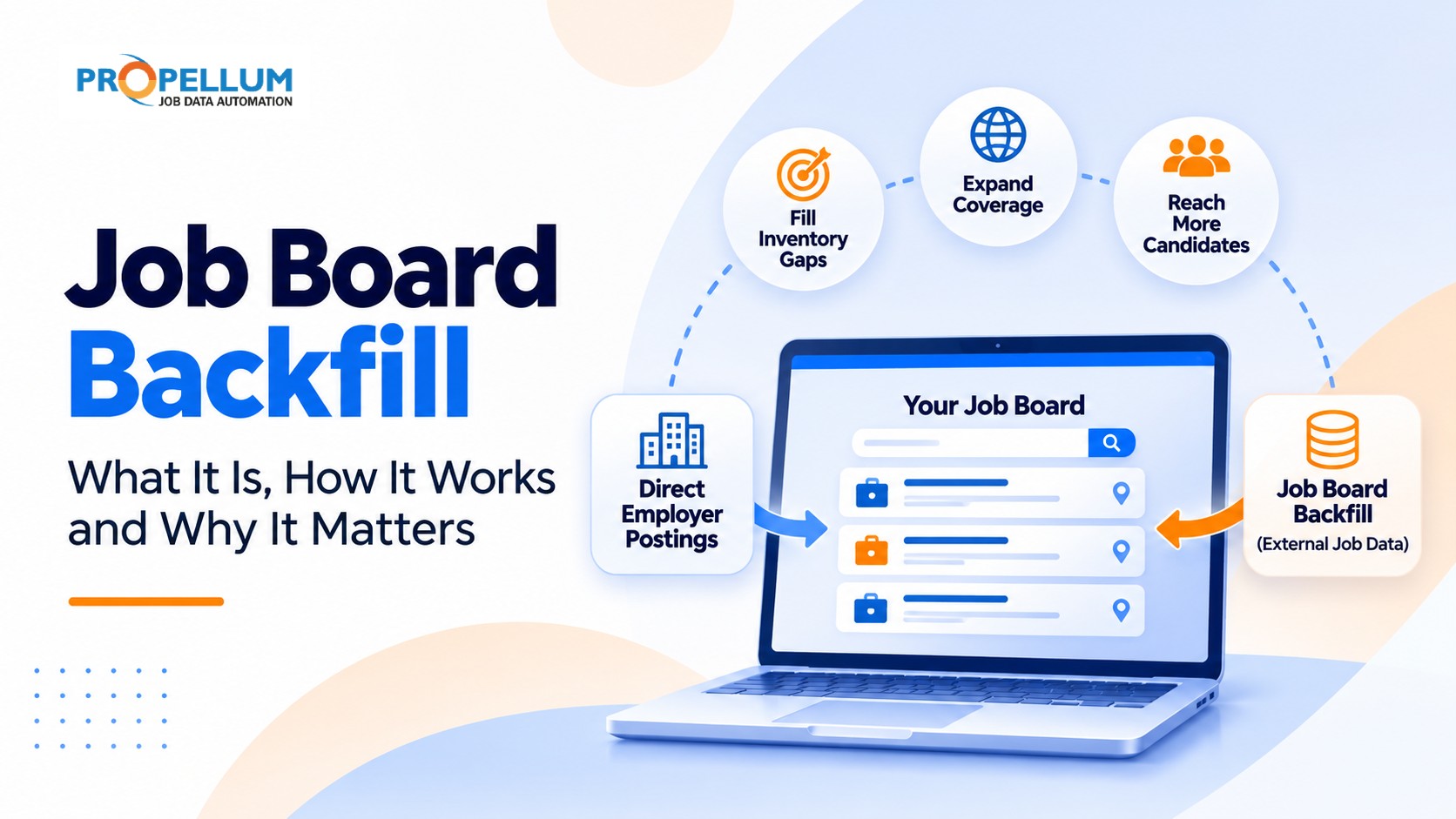
Job board backfill is the practice of adding relevant job listings from external sources to a job board’s existing inventory. These listings appear alongside jobs submitted directly by employers.
Sources may include employer career websites, applicant tracking system career pages, job data providers, aggregators, or partner networks. Listings are commonly supplied through feeds or APIs, depending on the provider and integration requirements.
Here, backfill means adding external listings, not the HR term for a replacement hire.
What Does Backfill Actually Do?
Backfill extends the range of opportunities a job board can offer without relying entirely on direct employer submissions. It can help a platform:
- Build initial inventory while developing employer relationships.
- Fill gaps in selected occupations, industries or job categories.
- Expand geographic coverage where direct postings are limited.
- Include opportunities from employers that do not post directly on the platform.
- Maintain relevant inventory as direct submissions fluctuate.
Consider a technology job board with strong software engineering inventory in the United States but few cybersecurity opportunities in Germany. A targeted backfill feed can address that gap. A broad job feed full of unrelated roles may increase the listing count without solving the board’s actual problem.
How Does Job Board Backfill Work?
Backfill involves more than importing a file. A useful process has five steps:
- Identify the gap: Decide which roles, industries, employers or locations need more coverage.
- Select sources: Assess providers for relevance, coverage, permitted use and delivery terms.
- Receive listings: Import jobs through a feed, API or agreed integration.
- Prepare records: Map titles, employers, locations, descriptions, posting dates and application URLs to the board’s data structure.
- Maintain inventory: Match records against existing jobs, process updates and remove vacancies that are no longer open.
A feed that adds jobs but does not support reliable updates can make inventory look larger while becoming less useful.
Backfill and Direct Employer Postings Serve Different Purposes
Direct employer postings build a relationship with the hiring organisation and may provide exclusive inventory or paid employer services.
Backfill broadens coverage with external listings. Depending on the provider and agreement, jobs may link directly to an employer’s application page or use an affiliate or partner tracking journey. Check display rights, attribution, application routing and commercial terms before publication.
Backfill should complement, not replace, direct employer supply.
What Makes Backfill Data Useful?
The number of records in a feed is only one measure of value. A job board should assess the inventory it can actually publish and maintain.
- Relevance: Do roles match the board’s industry, audience, and geographic focus?
- Source transparency: Can the provider identify where listings originate and explain permitted use?
- Coverage: Does the feed add employers, occupations, or locations missing from current inventory?
- Data completeness: Are key fields structured for search and filtering?
- Freshness: Are new, updated and closed listings reflected in a dependable update cycle?
- Duplicate control: Can repeated vacancies be identified across external sources and direct postings?
One useful internal measure is the usable inventory rate: the share of received records that remain after relevance, duplicate, and freshness checks. This tells a board more than the raw number of listings delivered.
Why Job Board Backfill Matters
Inventory affects what candidates can discover and how well a job board serves its market. Backfill can help establish coverage, support expansion, and reduce dependence on the timing of direct employer submissions.
However, more listings do not automatically mean better search visibility or more applications. Duplicate pages, incomplete descriptions, and expired vacancies can undermine the experience. Google’s JobPosting structured data guidance applies to individual job detail pages, not search-result pages, and requires expired listings to be removed or handled correctly.
The objective is not maximum volume. It is relevant, current, and well-structured inventory.
How Propellum Supports Job Board Backfill
Propellum helps job boards and aggregators access listings sourced from employer career pages and other employment sources. Job data can be extracted, structured, enriched, validated, and delivered through XML, JSON, APIs, or custom integrations.
This can support initial inventory, coverage expansion, category gaps, and ongoing updates. The right setup depends on the board’s audience and data requirements.
Job board backfill
Frequently Asked Questions
They are related but different in emphasis. Job aggregation means collecting or combining listings from multiple sources. Backfill means using external listings to supplement a particular board’s inventory.
No. Backfill generally complements direct postings by adding coverage where the board has gaps. Direct listings remain important for employer relationships and exclusive opportunities.
Review source coverage, relevance, data permissions, field completeness, update frequency, duplicate handling, expired-job removal, application links, and delivery compatibility. Compare providers on usable listings, not only total records supplied.