A job board does not need to serve every profession to create a valuable marketplace. A focused platform can help employers and candidates in a defined industry find relevant opportunities more easily. But choosing a niche is only the beginning. It must build relevant inventory, maintain coverage, and give users a reason to return.
Why specialization can create an opportunity
Generalist job boards serve many industries and professions. Their breadth is useful, but people searching in specialist fields may have to filter through roles that are only loosely relevant to their experience.
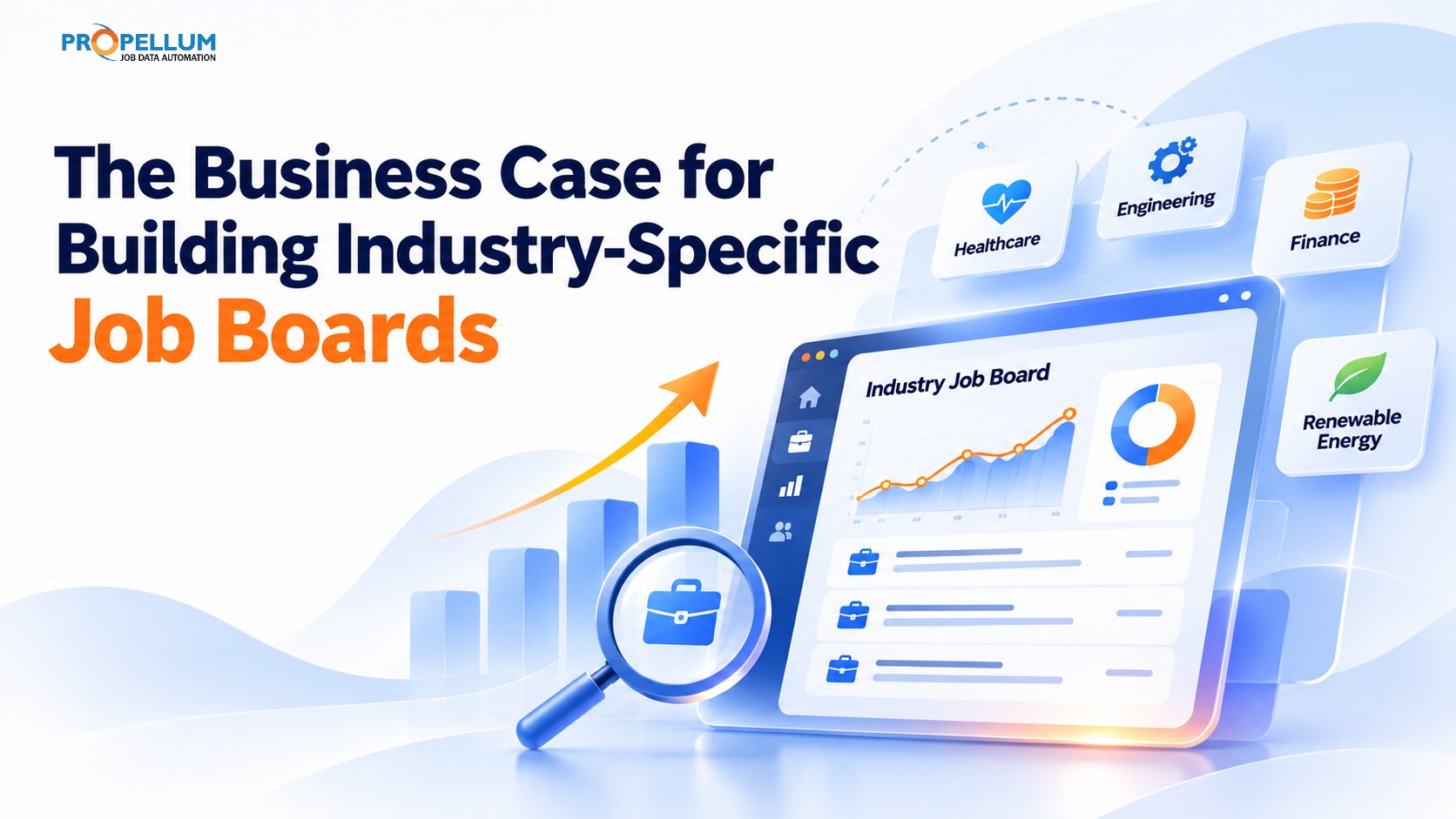
An industry-specific platform can organize its experience around a defined audience. A healthcare board might cover clinical, allied health and healthcare administration roles. An engineering platform could distinguish between civil, mechanical and electrical engineering. A renewable energy board might focus on opportunities across solar, wind and energy storage.
The opportunity is to understand the employers, roles, locations and skills that matter, then make relevant opportunities easier to discover.
Niche platforms already form part of the recruitment mix. iHire’s 2026 State of Online Recruiting report, based on surveys of 318 US employers and 1,054 job seekers, found that 45.3% of surveyed employers used industry-specific or niche job boards. Among job seekers, 50.9% reported using them. The findings do not guarantee success for every niche platform, but they show that specialized boards have a place alongside generalist channels. Source: iHire, 2026 State of Online Recruiting
The challenge is building a relevant job inventory
A niche job board‘s promise depends on whether it consistently presents opportunities that fit its audience. A healthcare platform, for example, will struggle to retain users if its listings have little connection to healthcare practice.
Target employers may be spread across career websites, locations, and business sizes. Focusing only on large, familiar organizations can leave gaps in smaller or specialist employers.
Job titles and requirements also vary. Similar work may appear under different titles, while the same title can describe different responsibilities across employers. Industry terminology, certifications, and skills can determine whether a listing is genuinely relevant.
Inventory also changes continuously. New roles appear, vacancies are updated, and filled positions need to be removed or marked closed. Listings lose value when users cannot tell whether opportunities are current.
Coverage and relevance therefore need to grow together. Adding listings without considering their fit can weaken the experience that makes a niche platform distinctive.
What a strong specialized job inventory needs
A useful inventory begins with a clear definition of its industries, sub-sectors, occupations, employer types, and geographic boundaries. The underlying job data should support those distinctions:
- Employer: company name and relevant organization details.
- Role: job title and description.
- Industry and specialization: sector, sub-sector or professional area.
- Skills and qualifications: capabilities, certifications, and experience requirements where available.
- Location and work arrangement: geography and remote, hybrid or on-site details where provided.
- Posting dates and status: information to manage freshness and identify vacancies that are no longer active.
These fields support audience-focused listings, useful filters, category pages and employer profiles.
Classification also requires care. A job title alone may not be enough to identify a role’s industry or specialization. Platforms should distinguish information stated in a posting from classifications inferred from context, and avoid presenting uncertain inferences as facts.
How structured job data supports niche platforms
As a specialized job board expands, collecting listings manually or maintaining separate processes for every employer can become difficult to scale. Structured job data provides a more consistent foundation for building and updating inventory.
A data partner can help a platform access listings from relevant employer career sites and receive agreed information in a format that can be integrated into its systems. Fields may include employer, title, description, location, skills, and posting dates.
Structured delivery helps a job board apply its own industry rules and filters. The platform remains responsible for deciding which listings fit its market and what quality standards to apply.
Data infrastructure does not replace a clear niche, employer relationships or a useful candidate experience. It can reduce the operational burden of sourcing and maintaining inventory, allowing the platform to focus more on its audience and product.
Building the data foundation with Propellum
Propellum provides job data infrastructure for platforms that need structured job information at scale. Relevant capabilities for specialized job boards include:
- Job Records API: structured job information such as employer, title, description, location, skills, and posting details where available.
- Skills Intelligence Feed: skills associated with job requirements.
- Custom job data collection: collection requirements aligned with defined employers, industries, geographies, and delivery needs.
The right approach depends on the target market, employers, required fields, and refresh frequency.
Specialization needs a dependable data strategy
An industry-specific job board succeeds by being relevant to a defined audience. That requires dependable coverage of the employers, roles, skills, and locations that matter in its market.
The business question is whether operators can maintain an inventory that gives employers a reason to list jobs and candidates a reason to return.
A focused marketplace, supported by relevant and structured job data, can create a differentiated experience without trying to replicate the scale of a generalist platform.
Frequently asked questions
It is an employment platform focused on a defined sector, profession, or specialist talent group, organizing opportunities around the roles and employers relevant to that audience.
Typically, employer details, job titles and descriptions, industry, skills, qualifications, location, work arrangement, posting dates, and job status, where available. Requirements depend on the platform’s audience.
A provider can deliver structured listings through APIs or feeds. The job board defines its market, relevance rules, and publishing standards.